Crafting a Confident Coach Match Experience
Future is a fitness startup that pairs members with personal trainers and delivers personalized workout plans through the app, featuring tailored workout videos and progress tracking for each user’s specific goals. During the pre-signup journey, users complete a fitness oriented quiz designed to understand their goals, preferences, and training needs—an essential step in matching them with the right coach.
Marketing identified a significant drop-off at the coach selection stage. Many users lacked confidence in choosing a coach aligned with their goals, creating hesitation that prevented them from completing sign-up and taking the first step in their fitness journey.
Discovery & Strategy
I partnered closely with the product manager to define goals: guide users through coach selection with clarity, streamline the decision-making process, and align with marketing’s rollout of new coach photos and enhanced profiles. I collaborated with analytics to uncover drop-off points, coach operations to maintain accurate profile data, and engineering to ensure feasibility and a smooth handoff. This cross-functional approach kept the redesign focused on both user needs and business priorities.
Competitor Analysis
I looked at both direct and indirect competitors to see how people find and choose experts. Fitness apps like Ladder, Equinox+, and Peloton used structured bios and personality-driven profiles to build trust, while platforms like MasterClass, Tinder, Airbnb, and Headspace offered lessons in storytelling, clear decision flows, and social proof.
Key insight: People feel confident when profiles are easy to scan, trust signals are visible, and the selection process is simple—insights that guided the redesign of Future’s coach selection experience.
Ideation & Workshops
The next step was to workshop the ideas in a FigJam session with the product manager, marketing, coach operations, and analytics teams to uncover why users were dropping off. Common themes emerged:
• Feeling like they were “just picking a face”
• Too many options creating decision fatigue
• Inconsistent or unclear bios
• Uncertainty about how Future works
• Concern that coaches shown weren’t the “best matches”
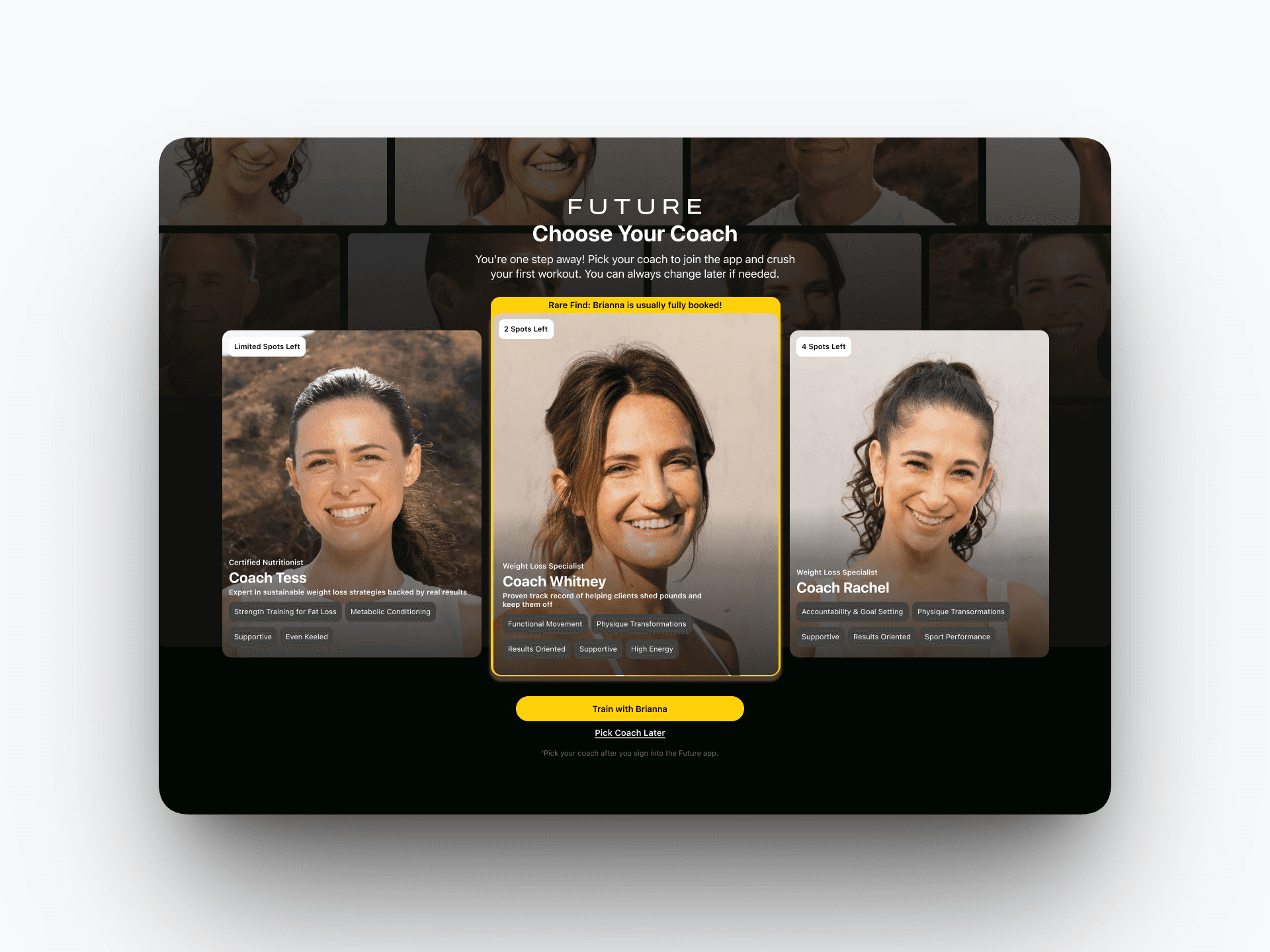
I translated these insights into a focused design direction that built trust and urgency—guiding users through an informative coach selection experience while reinforcing that the right coach, with limited availability, was ready to help them start now.
Wireframing & Exploration
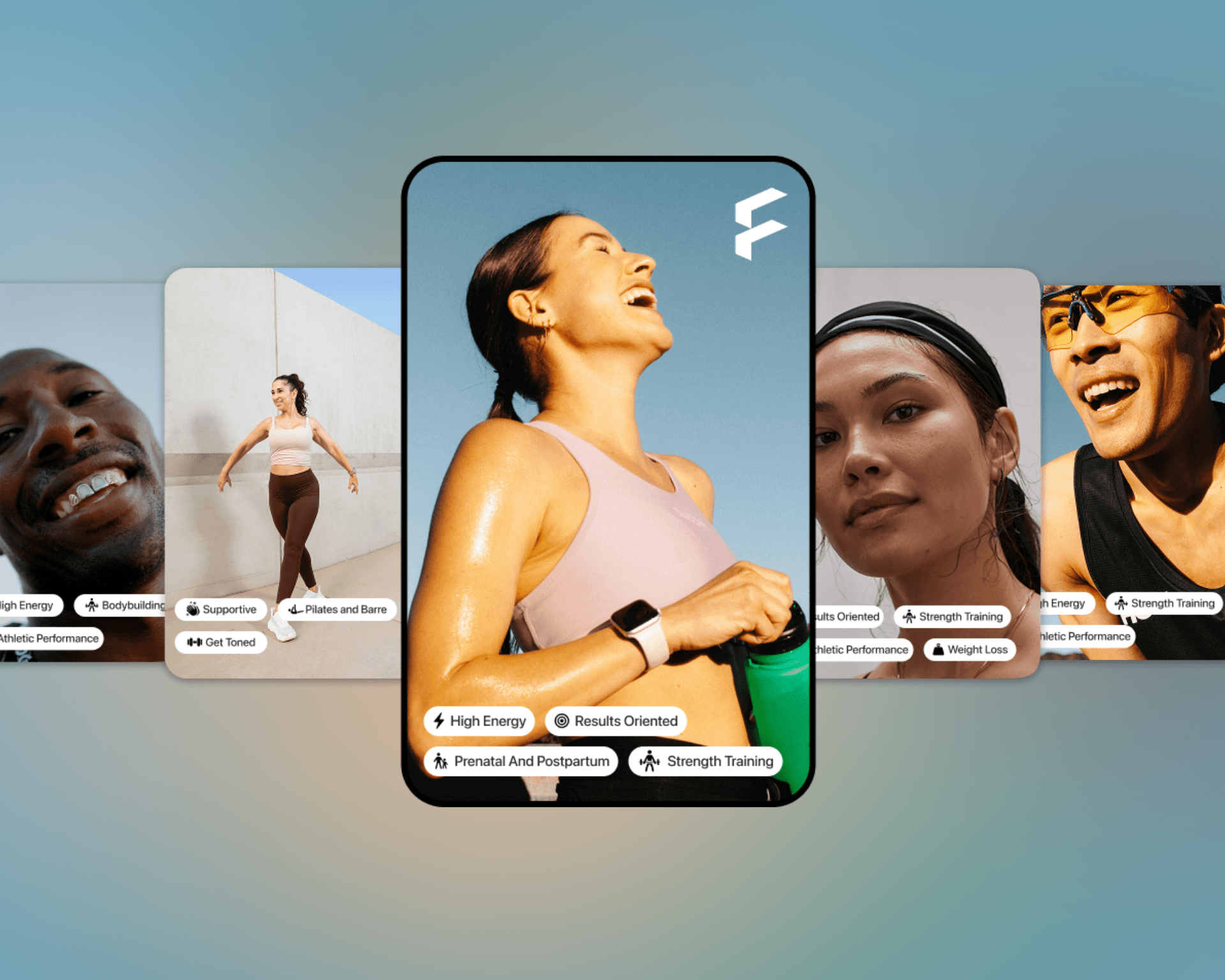
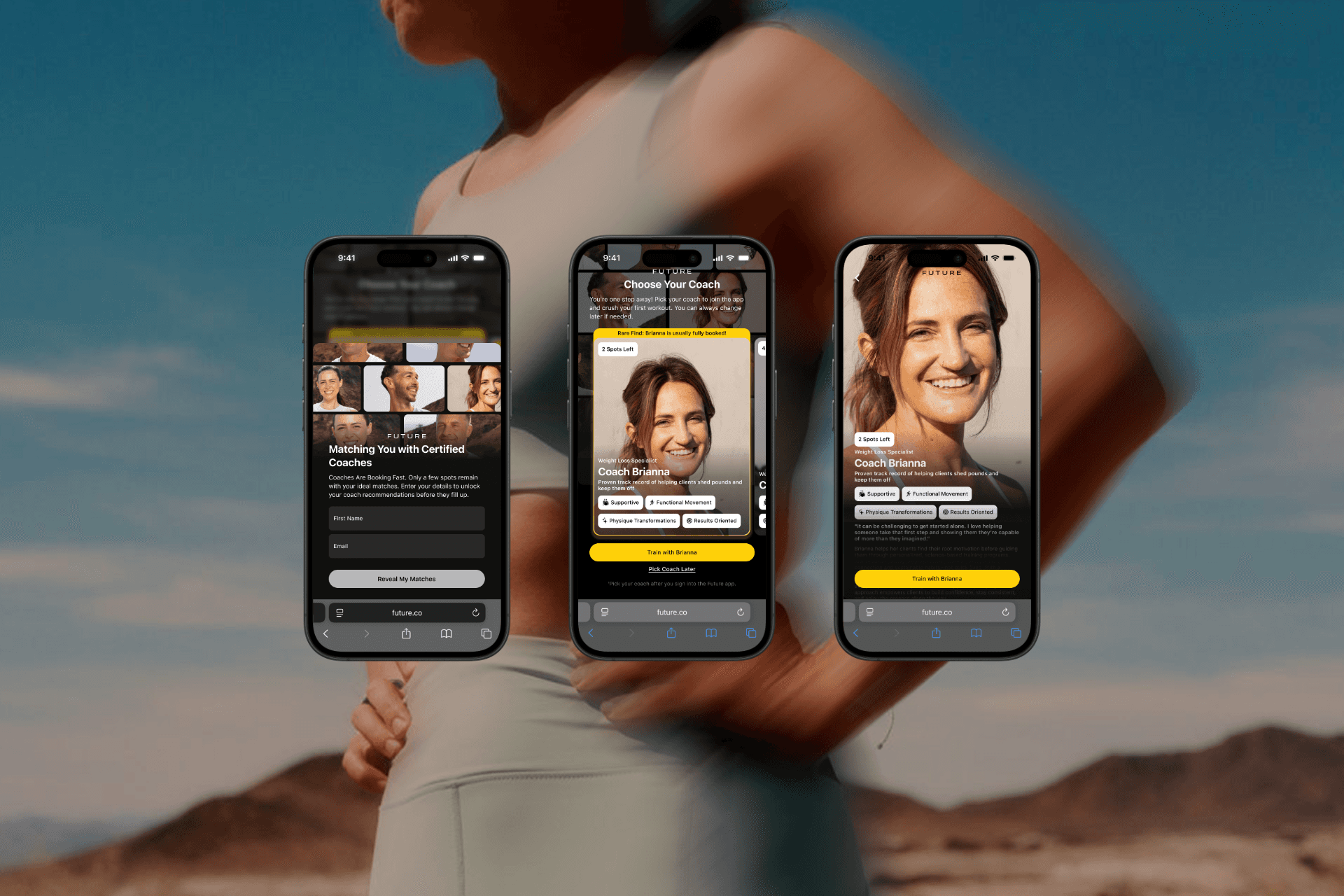
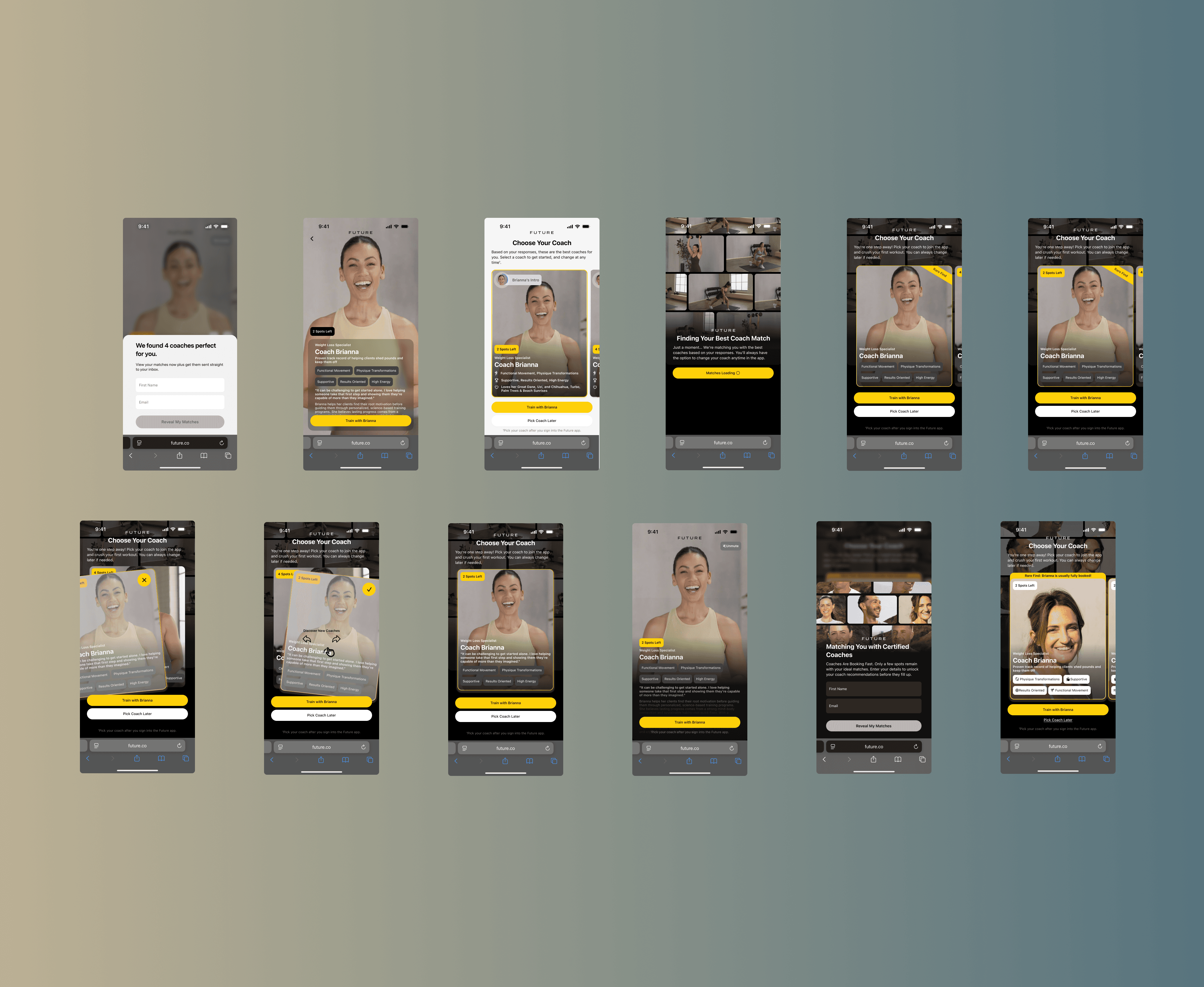
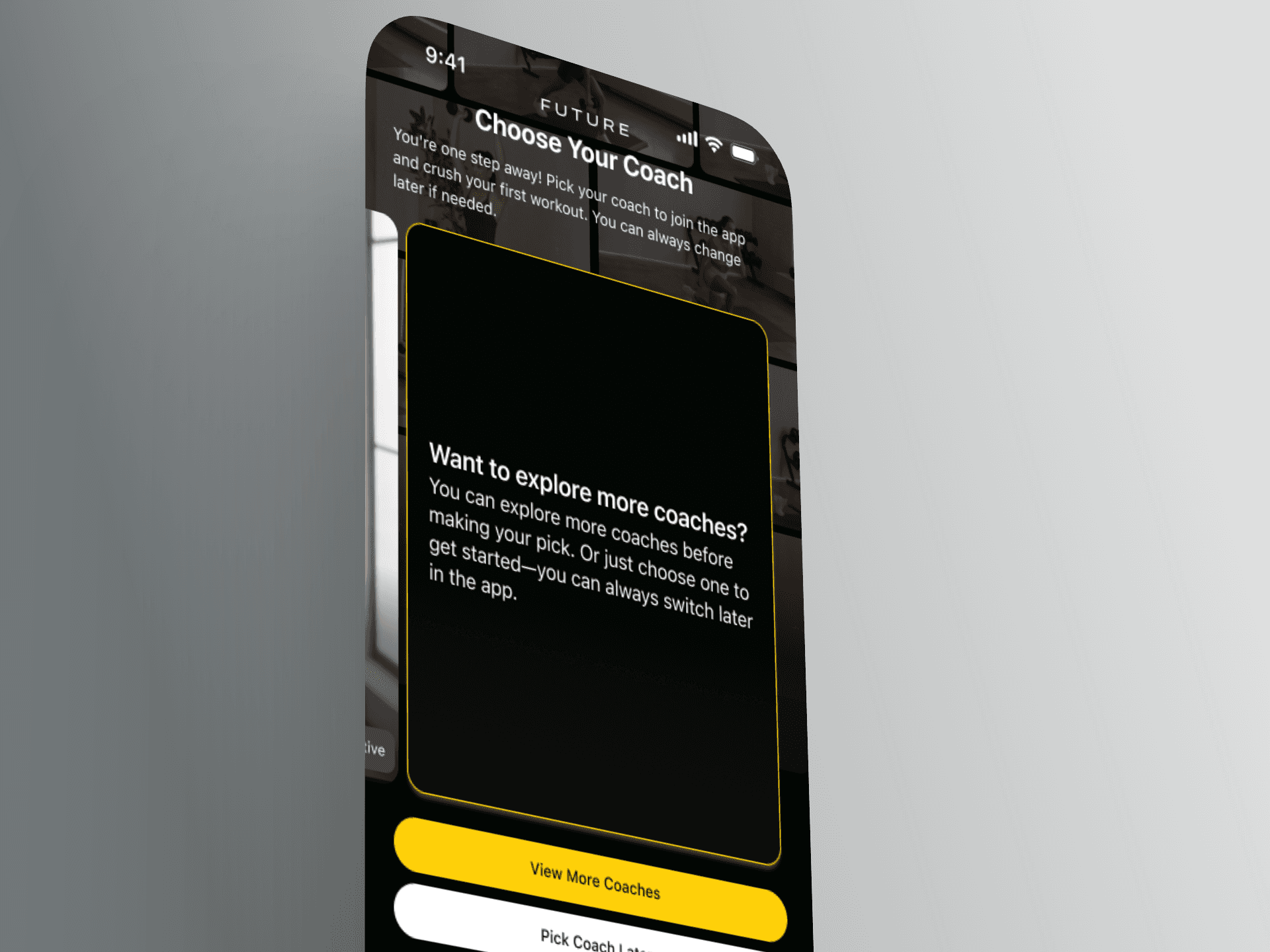
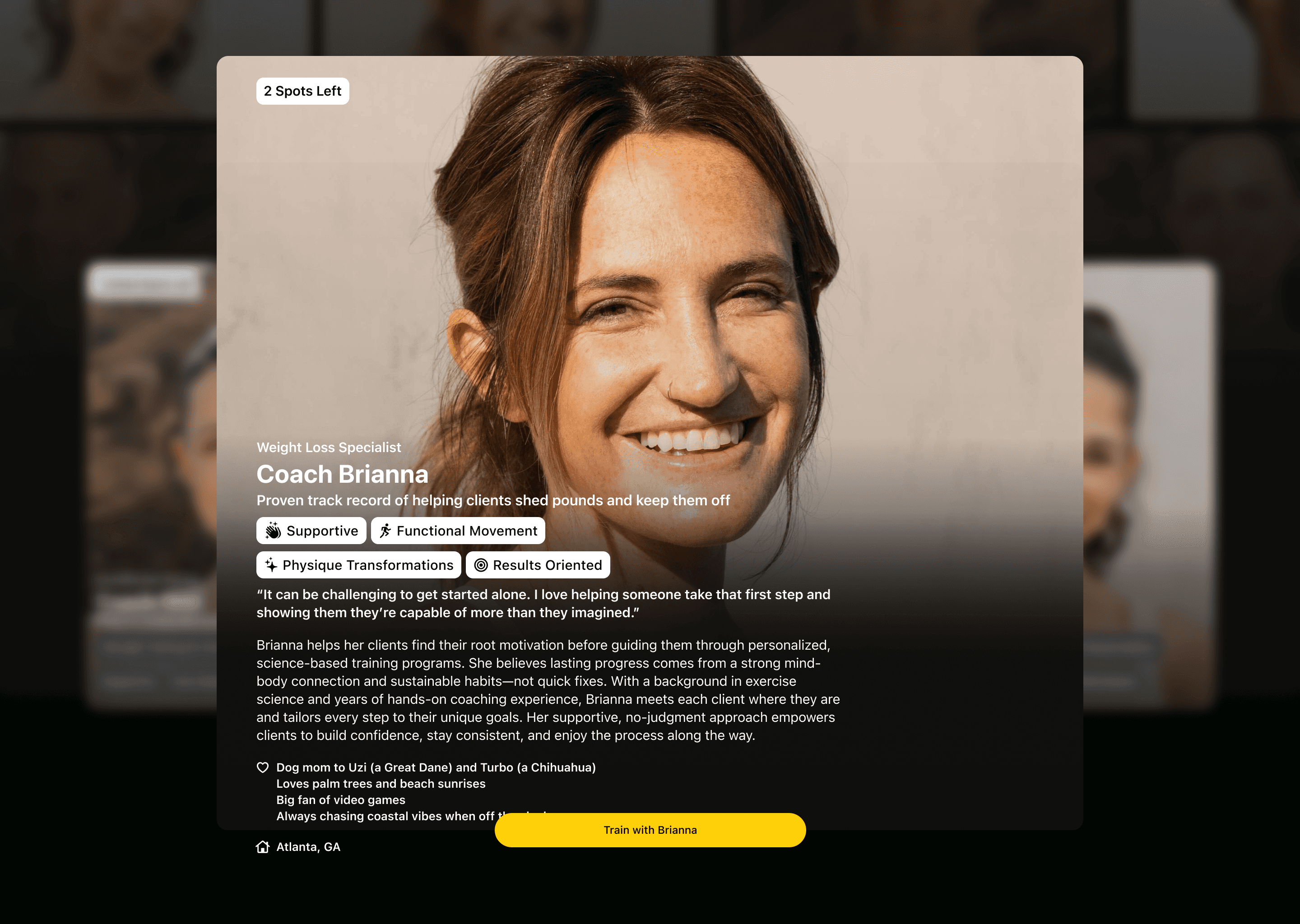
Building on insights from the FigJam session, we explored several ways to make coach selection more engaging and clear. We experimented with UGC-style video content and audio cues to bring coaches’ personalities forward, but ultimately focused on up-leveled profile metadata to surface key details at a glance, keeping the flow clear and uncluttered. We also tested swiping mechanics inspired by dating apps, which added interactivity but proved less efficient for desktop users. Scarcity badges like “Rare Find” and “2 Spots Left” were added to highlight availability and guide timely decisions. These iterations helped prioritize the elements that best improved clarity and confidence for users.
Development & Impact
After design reviews, I collaborated closely with engineering, providing annotated designs, reviewing feasibility, and QA’ing the final build.
The redesign improved clarity and confidence in coach selection, leading to faster decisions and stronger engagement. Beyond immediate results, it uncovered opportunities for operational improvements—for example, surfacing coach availability highlighted scheduling gaps, which led to expanded weekend slots and more flexible coaching hours. These adjustments continue to enhance onboarding, optimize conversions, and ensure users can connect with coaches whenever they’re ready. The project set the foundation for ongoing refinements across the product, showing how design insights can drive broader business impact.